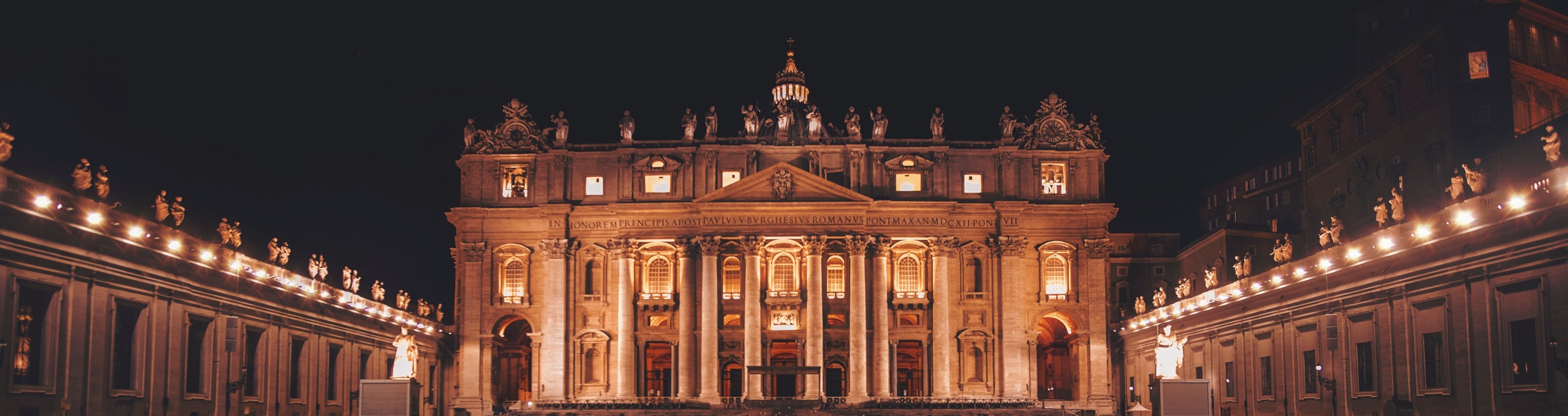
This tour takes you on a journey of discovery through the spiritual and artistic treasures of St. Peter’s Basilica, the largest church ever built by human hands and the symbolic center of Christianity. You will then be taken deep into the heart of the Basilica to explore the ancient Roman necropolis, over which Constantine built the first Basilica, incorporating the burial site of St. Peter.
This experience includes a guided tour of the Necropolis of St. Peter, led by multilingual guides, and an audio guided tour of the Basilica.
In this Basilica we encounter St. Peter, the Prince of the Apostles, martyred in 67 AD in Nero’s Circus, which once stretched across this site, and here laid to rest in the bare earth by devout Christians. Over the centuries, upon that humble burial place, the Church’s love for Peter—together with the architectural and artistic genius of men such as Michelangelo, Bernini, and Raphael—created a place of unique and unrepeatable beauty and grandeur. At its center rises Bernini’s great bronze Baldachin, erected above Peter’s tomb deep within the Basilica, dominated by the sweeping perspective of Michelangelo’s dome. In the side aisles and the grottoes below, we encounter a succession of pontiffs, witnesses to the Church’s centuries-old history, as well as eternal masterpieces of art, such as Michelangelo’s Pietà.
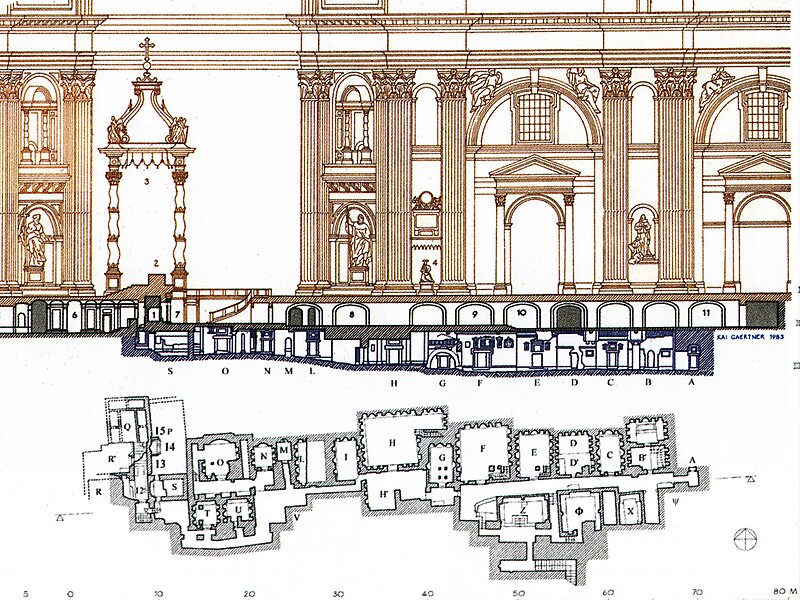
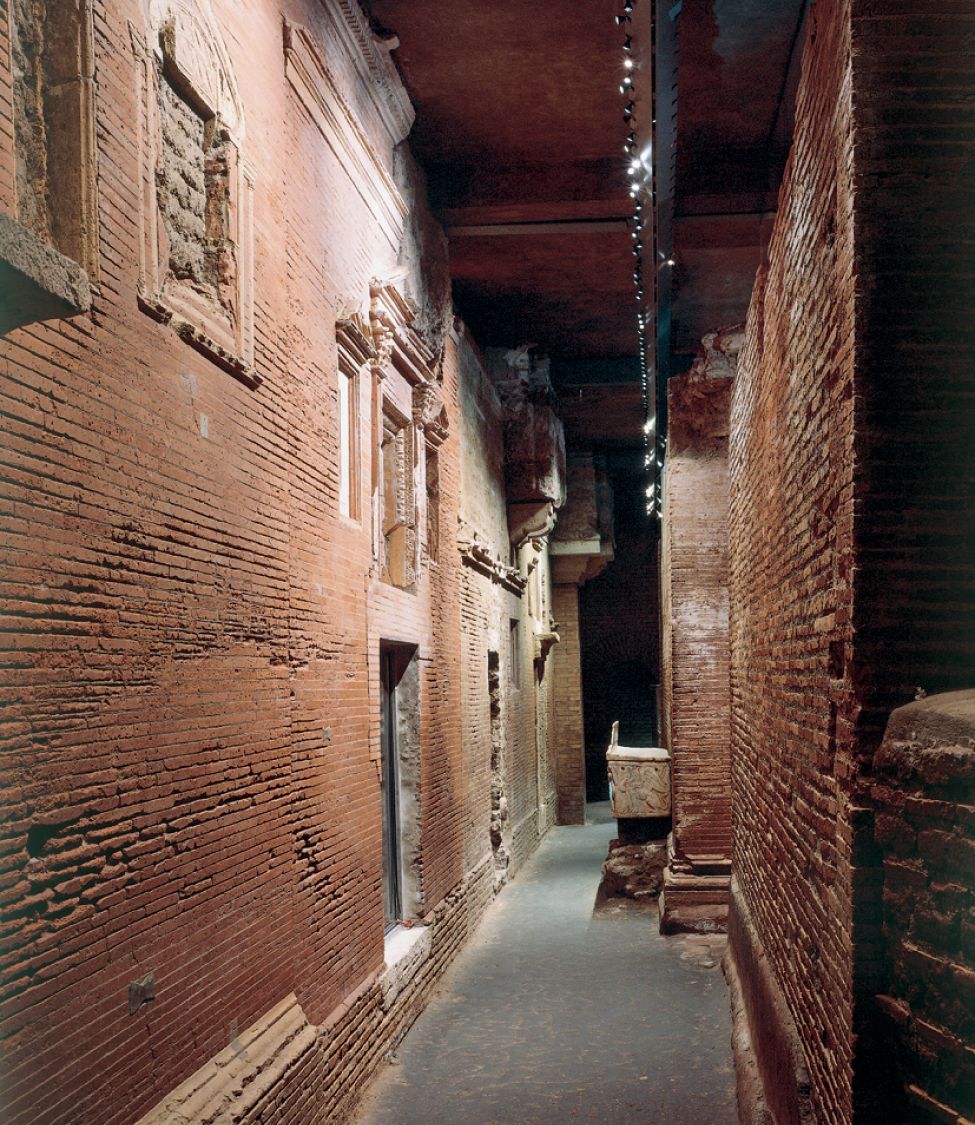
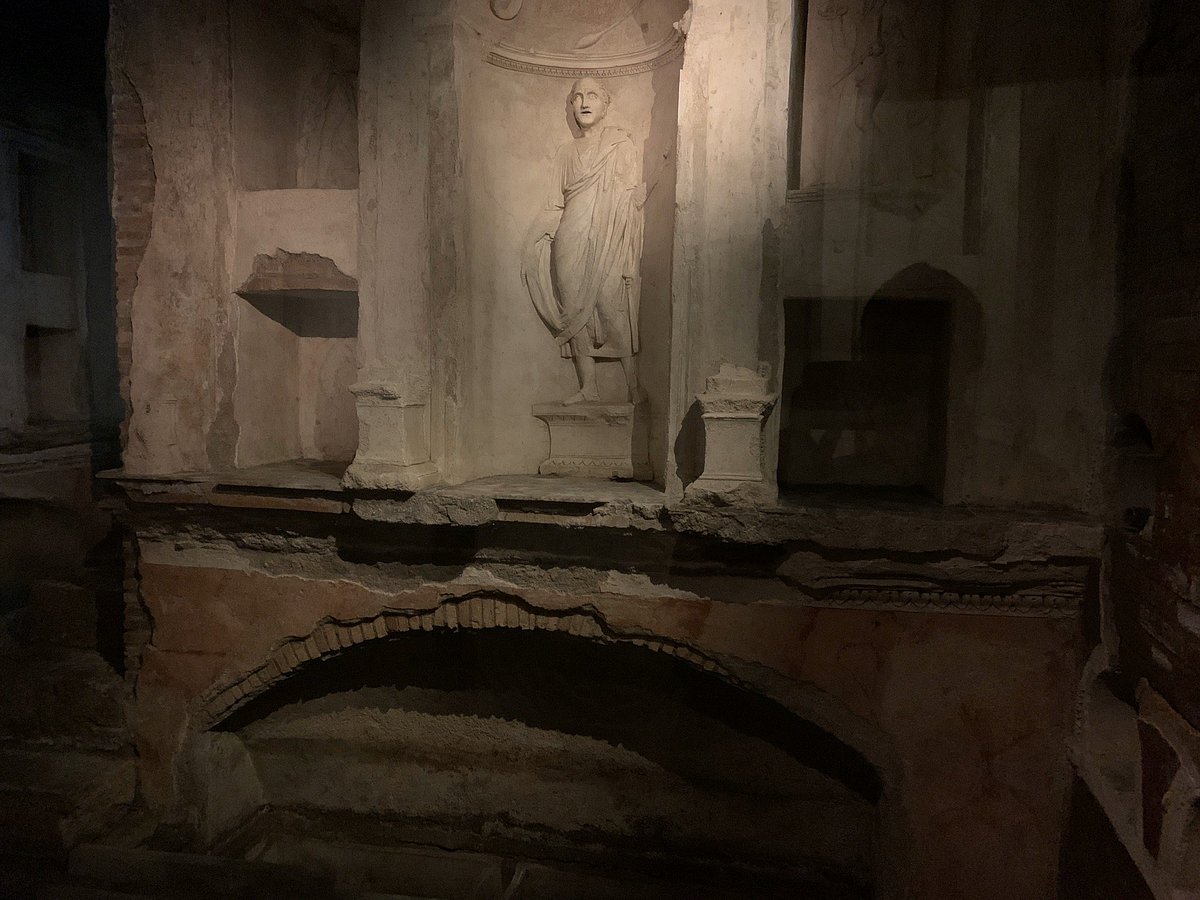
The tour will then take us down to the vast Roman Necropolis beneath the Basilica. In its vicinity, around 150 AD, a small shrine, which went down in history as the Trophy of Gaius, was built to hold the mortal remains of St. Peter. In 319, when Constantine decided to build the first Basilica over Peter’s burial site, he designed it in such a way as to honor the dignity of the Apostle while preserving the pre-existing Necropolis, only cutting the upper portions of the tombs. Peter’s tomb and the Necropolis remained sealed and inaccessible to pilgrims for sixteen centuries. In 1939, Pope Pius XII commissioned a team of archaeologists to begin excavating beneath the Basilica. These excavations, completed in 1949, uncovered the extensive pre-Constantinian Necropolis and, within it, the tomb of St. Peter. In 1952, based on certain inscriptions, Peter’s mortal remains were identified and are now laid to rest and accessible for veneration during the course of the tour.
MEETING POINT
AUDIO GUIDE
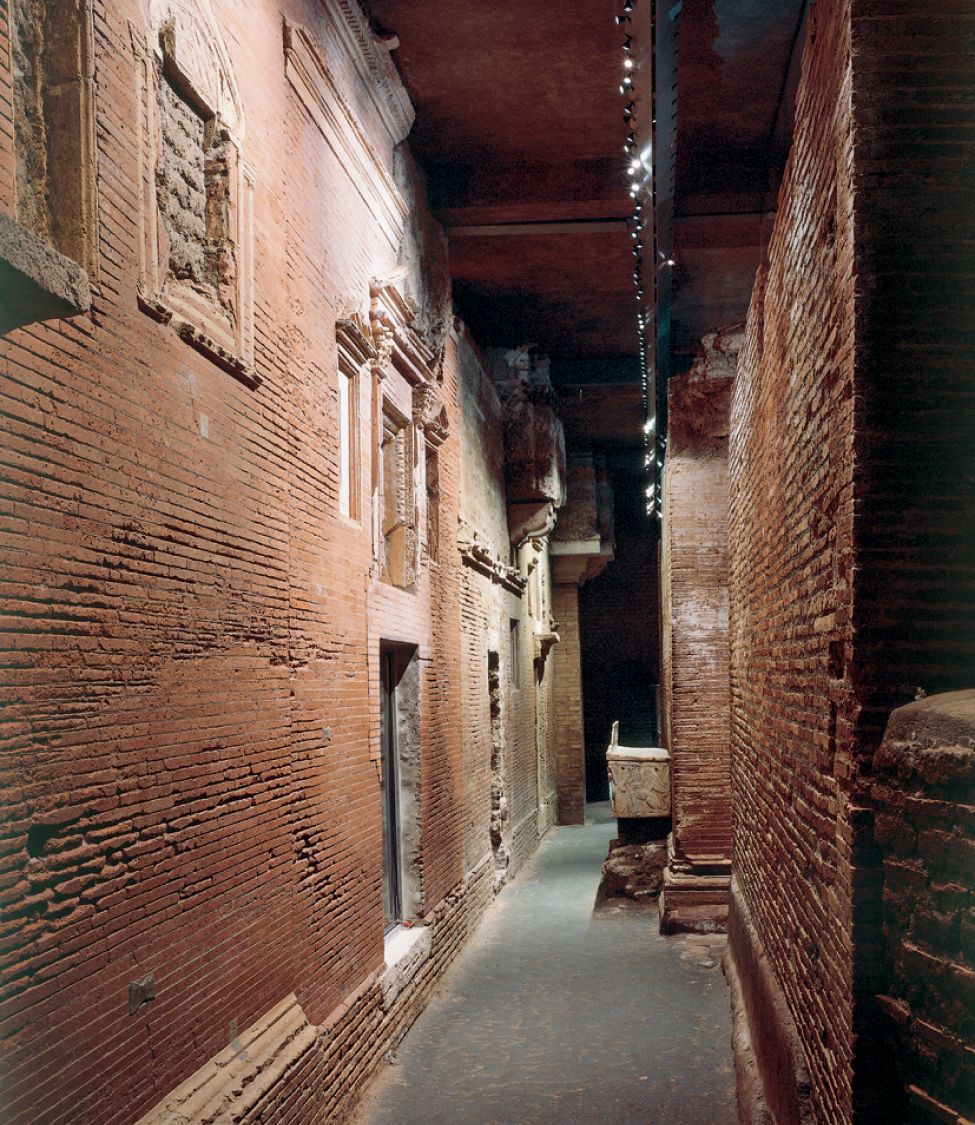
After Peter’s death, a group of Christians recovered his body and buried it in the bare earth, in accordance with Roman custom, close to a Roman necropolis that had arisen along the sides of the Via Cornelia, which ran through the area. Around the second century, clandestine devotion to the Apostle began with the construction of a small memorial shrine, which went down in history as the Trophy of Gaius, named after the traveler who recorded its presence in his writings.
When Constantine began the construction of the first basilica, he commissioned his architects to build it over the necropolis, cutting only the upper portions of those tombs, which mainly belonged to freedmen—former slaves who had gained success and could afford elaborate burial monuments. The new basilica was therefore erected over the Trophy of Gaius, incorporating it within a dignified setting. The Constantinian site remained an important landmark through the centuries as the burial place of Peter. Over time, however, it was lost from view for the faithful due to successive work that raised the floor of the Basilica. In 1939, Pope Pius XII commissioned a team of archaeologists to begin excavating beneath the Basilica. The excavations, completed in 1949, uncovered the vast pre-Constantinian necropolis. Starting in 1952, the epigrapher Margherita Guarducci discovered an inscription confirming the location of Peter’s tomb, which led to the identification of his mortal remains. After extensive analysis by expert scientists, it was confirmed that these remains matched the profile of Peter. In 1969, Pope Paul VI announced to the world the discovery of St. Peter’s relics.
hide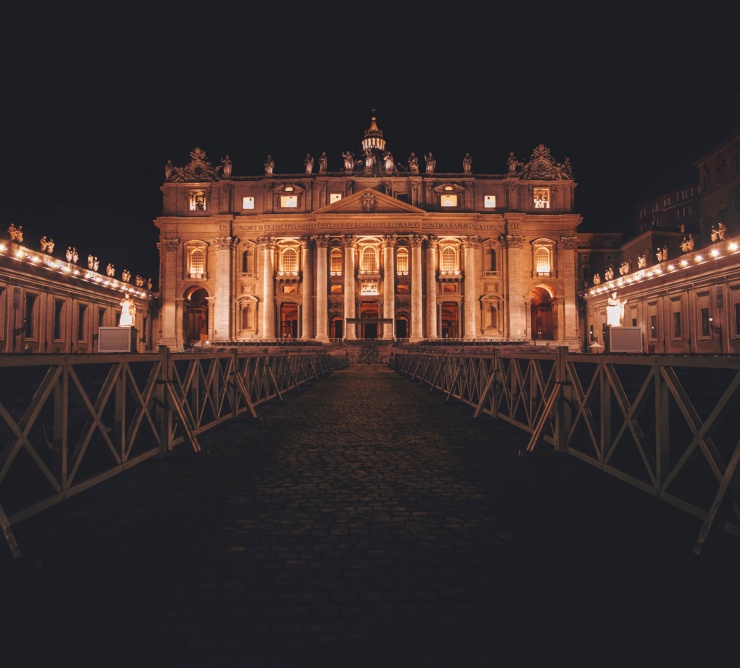
Originally built in 324 AD by Emperor Constantine in the vicinity of Nero’s Circus, St. Peter’s Basilica stands on the very site of St. Peter’s martyrdom and burial. In 1450, Pope Nicholas V began renovating the ancient basilica and commissioned architect Bernardo Rossellino to carry out the work.
In 1505, Pope Julius II took over the project, but rather than restoring the old basilica, he envisioned a completely new structure suited to the needs of the time. This marked the beginning of the ambitious construction of the new St. Peter’s, which would see the ongoing involvement of successive popes and a succession of the era’s greatest architects and artists, culminating in 1657 with Bernini’s creation of the colonnade. Around 10 architects contributed to this colossal project, each bringing their own vision for the basilica. Unfortunately, this resulted in a succession of plans that extended the time needed for its completion. Today, St. Peter’s is the largest church in the world. Over 183 meters (600 feet) long and covering some 20,000 square meters (215,000 square feet), it can hold up to 12,000 people. This status as the largest ever built is highlighted by the bronze letters embedded in the floor along the nave, which mark the dimensions of the fifteen largest churches in the world. The central nave is defined by four massive piers and matching arches, with smaller side aisles flanking the nave and opening onto richly decorated chapels.
hide